Hand-Painted Silicone: First Impressions of the SEDOLL Collaboration
In December 2025, a very well packed crate arrived at the studio.
Inside was a hand painted silicone figure, and the start of a project that will run longterm.
I want to be clear about what this is before anything else. It is not a subject and this is not a review. It is a tool, in the same category as a light stand or a tripod, with the difference that somebody spent a very long time painting it by hand.
I have been trying to solve a specific problem for years. This is my attempt at solving it.

Yuuka.H, hand-painted silicone.
The freckles are applied individually rather than printed.
The problem a figure solves
Studio time with a model is the most expensive and the least forgiving part of a shoot. There is a person standing in front of you, aware of every second, while you move a light two centimetres and look again. Very few people do their best work under that kind of pressure, and that includes the photographer.
Pre-visualisation means doing all of it before the model ever arrives. Building the set, placing the lights, testing the pose, shooting frames, then taking those frames into Capture One or Phocus and editing them until the look is finished. By the time a person walks in, the picture is already solved. You show them what you are going to make, and then you make it.
What that needs is a human form that holds still, holds a pose, and does not get tired. A wooden artist mannequin is useless for lighting because it has no skin and no surface behaviour. A stand-in costs money and gets bored after twenty minutes. A silicone figure with an articulated skeleton does the job precisely, at any hour, for as long as it takes.

Everything arrived intact.
The packaging is discreet enough that a neighbour would assume you ordered a very heavy shelf.
What arrives is a sculpture
The first thing you notice is the paint work, and the factory photographs do not prepare you for it. I ordered the Master Makeup option, and the difference between the product images and the object in front of you is larger than I expected from images that already looked good.
The freckles on the face are applied individually. The skin texture is moulded into the silicone rather than printed onto it, so it holds up at close range and under a macro lens. The fingers and toes are articulated. In a photograph shot close, it is very difficult to tell that you are looking at silicone at all.
My colleagues at WhiteWall look at printed detail all day and are not easy to impress. They were the ones who reacted most strongly to the paint work. That told me something about the level of hand craft involved, because their standard for surface detail is unreasonable high.

The head under soft light.
Hard light finds the sheen in silicone. Soft light finds the texture.
The face is deliberately not hyper-real
SEDOLL does not chase perfect realism in the heads, and I do not treat that as a shortcoming because it is clearly a decision rather than a limit. The aesthetic sits somewhere between a sculpture and a very good digital character.
That choice avoids a specific trap. Faces built to be perfectly real tend to fall into the uncanny valley the moment something is slightly off, and the result reads as wrong rather than as beautiful. A face built with a small degree of stylisation never enters that territory at all. It reads as an object made by a person.
Several photographers who saw my first frames assumed they were looking at a 3D render until I told them otherwise. That is roughly the right description: a very good render of a person, made by hand, in silicone.
How silicone behaves under light
This is the part that matters most if you are considering one as a working tool.
Untreated silicone carries a faint sheen that reads as silicone under hard light. Powdering the surface removes it. I have had to do it once so far, and afterwards the material takes light in a way that is convincingly close to skin. Dust also mostly stops clinging to it, which saves a considerable amount of retouching.
For photography I would light it softer than instinct suggests. Hard light finds the sheen. Soft light finds the moulded texture, and the texture is the whole point.
Similar to slightly oily skin.
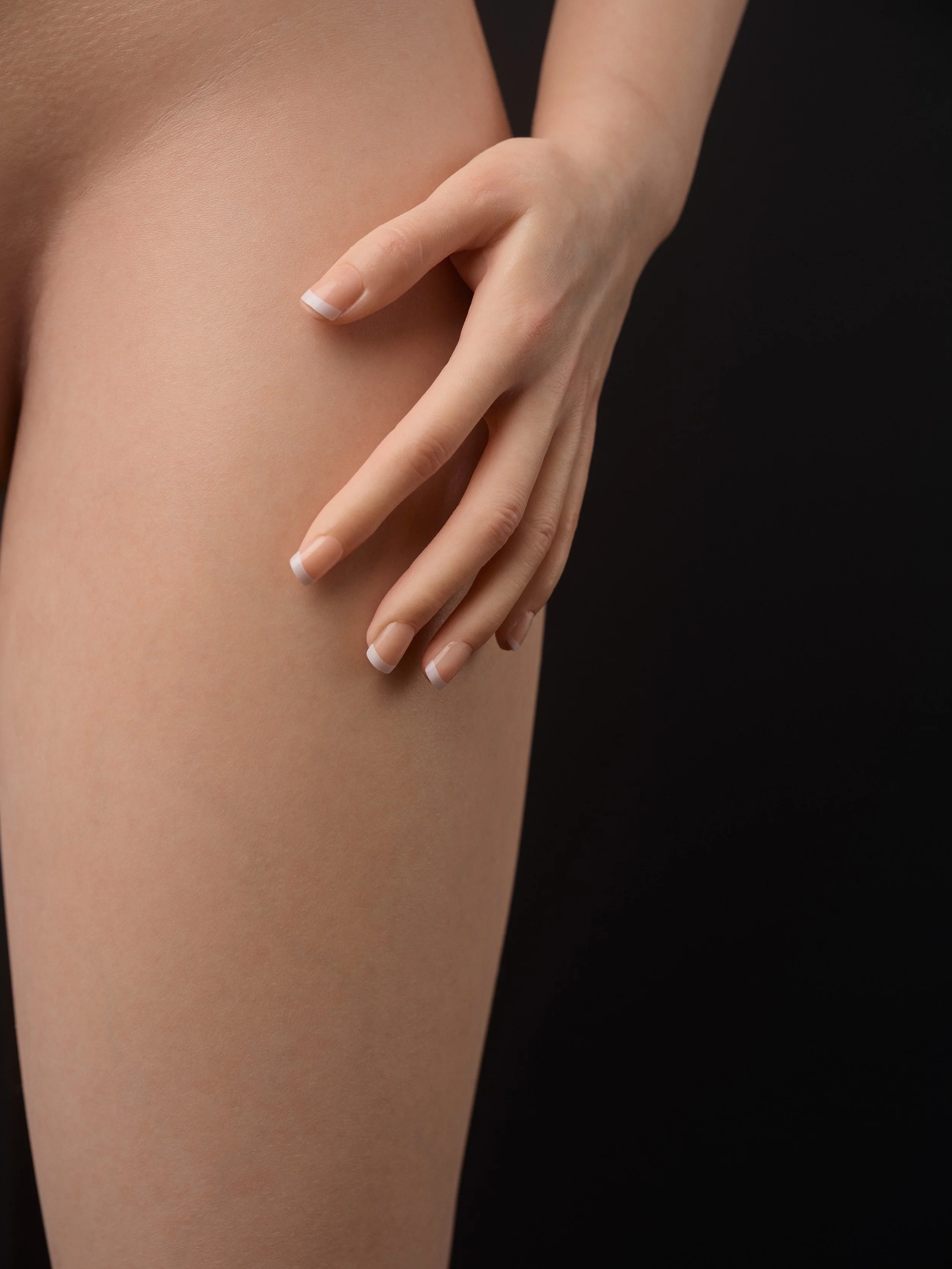
Articulated fingers and moulded skin texture.
At this distance the material is hard to identify.
What I would order differently
Two things, and I would rather write them down than pretend the first order was perfect.
I specified extra tight joints. They hold any pose without drifting, which is exactly what I asked for, but they take real strength to move and posing takes longer than it needs to. For the kind of work I do, the standard setting would have been the better choice. If you are ordering for photography rather than for display, do not over specify here.
The other is the nails. They are hard material against a soft surface, and that combination will eventually damage something no matter how careful you are. SEDOLL is working on painted nails, and the early images look great. I hope that option arrives soon
The figure is also heavy, around 34kg, which is worth knowing before you plan a session alone. I would look closely at the lighter body options if you are not particularly strong.
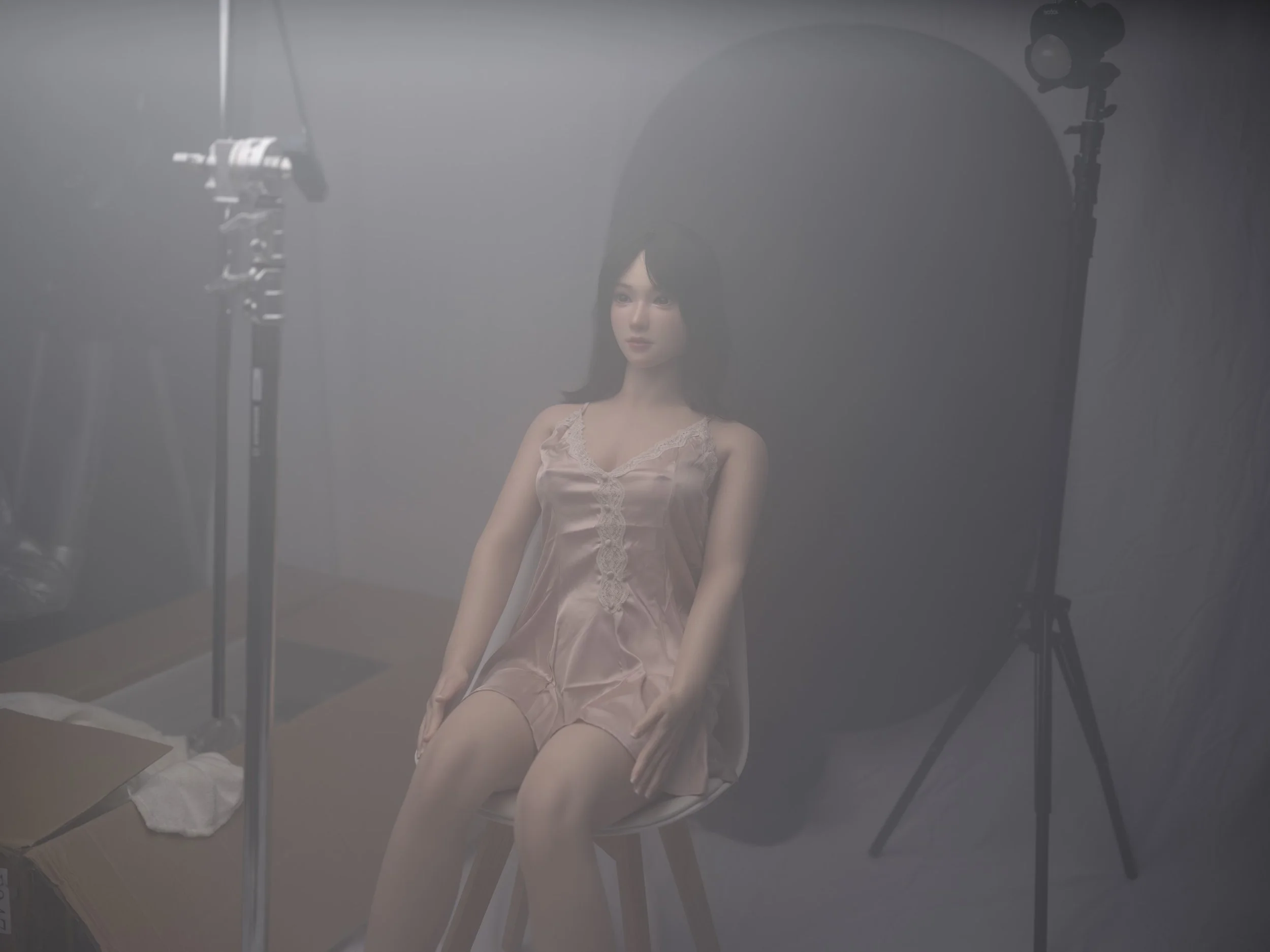
Testing a lighting setup before the shoot.
Nothing here is under time pressure.
What comes next
SEDOLL and I are working together on a project that will run longterm.
The visible result will be two things. A finished fine art artwork planned entirely through pre visualisation, and a course for photographers and artists that documents the whole path from the first sketch to the framed print. Concept and mood boards, budgeting a shoot honestly, pre-visualisation, casting, location scouting, contracts, shooting, culling, editing, retouching, print preparation, framing, and pricing. Every step, including the ones nobody writes about because they are boring and unglamorous and matter enormously.
Along the way I will publish the comparisons: the pre-visualised frame next to the finished photograph. That side by side is the clearest argument for the method that I can think of, and I would rather show it than describe it.
I will also dive deeper into the art of doll photography and you can expect many artworks featuring dolls in the coming years.
SETUP DETAILS
Collaboration: Cruentis and SEDOLL
Body: T163 with Master Makeup, natural skin tone
Specification: Evo skeleton, hard hands and feet, articulated fingers and toes, facial freckles
Head: Yuuka.H
Purpose: Pre-visualisation for fine art and portrait photography - Also used as a subject in future artwork
Project length: Ongoing
Output: A fine art series and a course for photographers and artists
Frequently asked questions
What is pre-visualisation in photography?
Building and testing a photograph before the shoot itself. Set, lighting, pose and composition are worked out in advance, and the test frames are edited to establish the final look. When the model arrives, the decisions are already made and the session is spent on performance rather than on problem solving.
Why use a silicone figure rather than a wooden mannequin?
A wooden artist mannequin has no skin, so it tells you nothing about how light will fall on a person. A silicone figure with moulded skin texture and an articulated skeleton reproduces both the form and the surface behaviour, which is what you are actually testing when you place a light.
How should silicone be lit for photography?
Untreated silicone has a faint sheen that hard light exaggerates into a plastic look. Powdering the surface removes most of it, and soft light then reveals the moulded texture rather than the reflection. Powdering also stops dust clinging, which reduces retouching.
Does the figure appear in the Cruentis fine art editions?
Yes, there will be a lot of artworks created with dolls on Cruentis.art
When is the course available?
It is in production and will take roughly a year, because it follows a real project from concept through to the framed print rather than being filmed as a set of lessons. Updates will be posted here as the work progresses.
Thanks
To SEDOLL for supporting the project and for making an object that is genuinely worth photographing on its own terms.